Choosing between a sliding door vs bifold door is one of the most important decisions you will make when planning a house extension or renovation.
Both options transform how your room connects to the outdoors, but they function in very different ways, offer unique design advantages, and suit different daily lifestyles.
Understanding how each system operates in practice makes it much easier to pick the ideal fit for your space.
The Key Differences
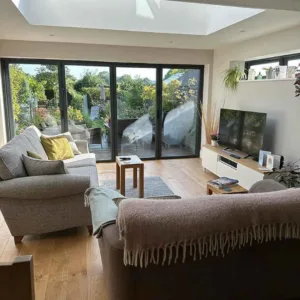
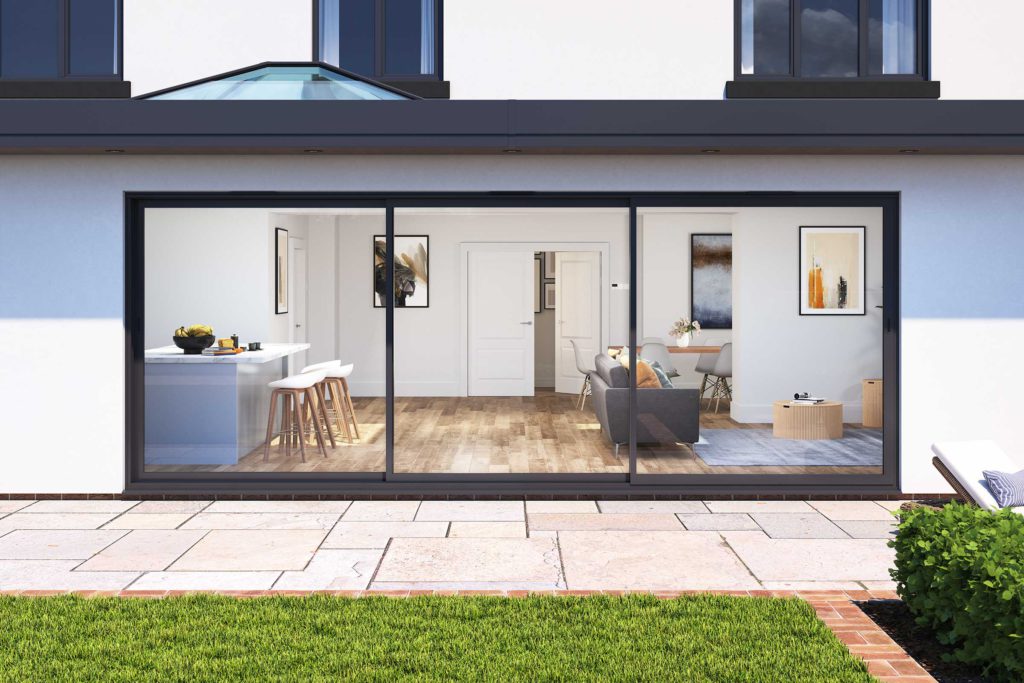
A sliding door operates on parallel tracks, with large panes of glass sliding behind one another. This allows for expansive glass panels and minimal vertical frame profiles, giving you uninterrupted views of your garden even when closed.
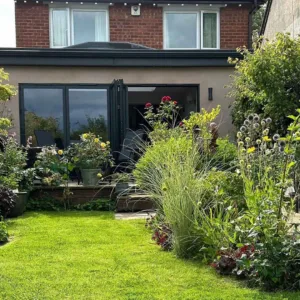
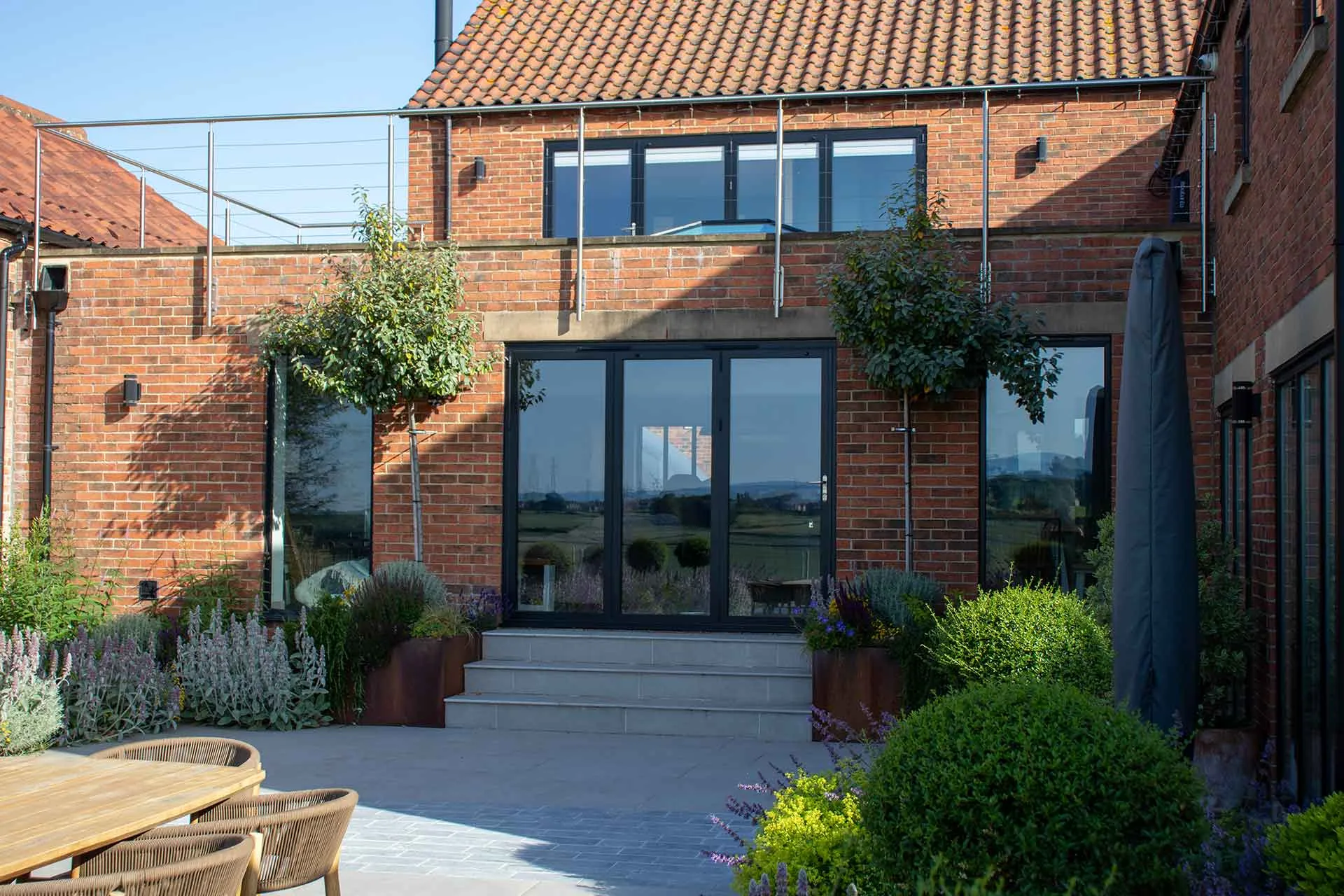
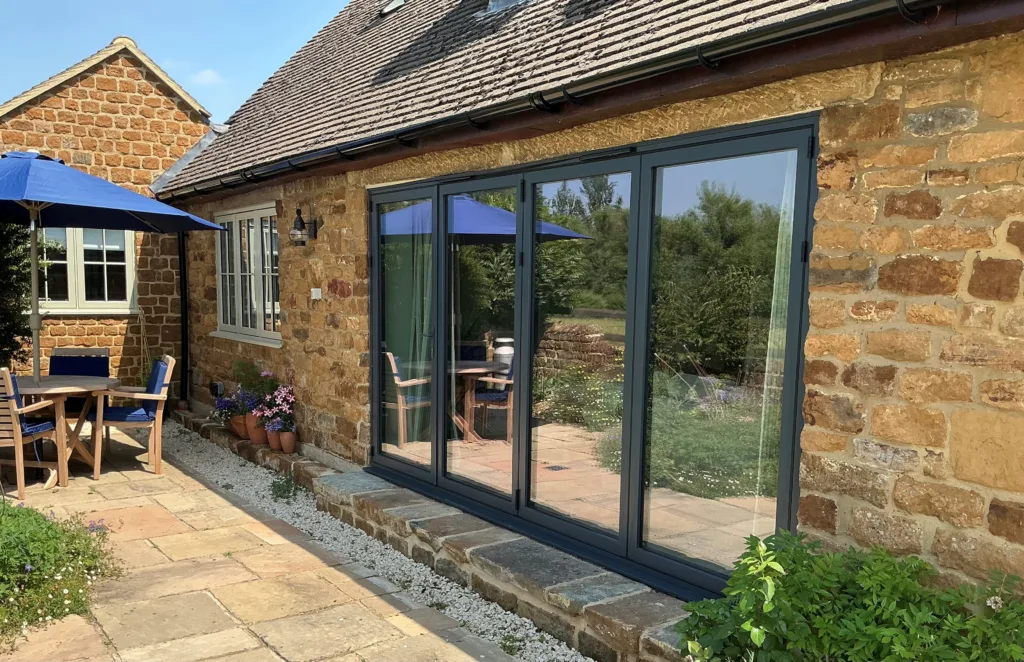
A bifold door features hinged glass panels that fold back like an accordion. When opened fully, the doors stack neatly to one side, opening up the entire aperture to merge your indoor living space seamlessly with your patio.
| Feature | Sliding Door | Bifold Door |
| Glass Panel Size | Larger individual panes | Smaller individual panes |
| Sightlines | Fewer vertical frames, clearer view | More vertical frame profiles |
| Aperture Opening | Partial opening (panes overlap) | Full 100% open clear opening |
| Patio Clearance | Requires zero exterior clearance | Requires clear space to fold open |
| Track Threshold | Wider (multi-track design) | Slimmer single track |
| Configurations | Typically 2, 3, or 4 panels | Up to 7 panels available |
The Advantages of Sliding Doors
If maximizing natural light and enjoying an unobstructed landscape view are your top priorities, sliding doors excel. Because the panels can be engineered much wider than bifold sections, you end up with fewer vertical frame lines breaking up your view.
- Superior Thermal Efficiency: Larger uninterrupted glass surface areas and specialized multi-chamber frames contribute to excellent overall thermal performance.
- Space-Saving Operation: Because sliding panels move horizontally within their own frame, you do not need to clear patio space for them to open. You can place outdoor furniture, planters, or lounge chairs right up to the glass.
- Unmatched Views: Even during cold winter months when the doors stay closed, sliding systems deliver a clean, panoramic wall of glass.
The main tradeoff with a sliding door is that the opening is never entirely clear. At least one glass pane will always remain in position within the frame.
The Advantages of Bifold Doors
Bifold doors are built for seamless indoor-outdoor living, making them a standout choice for summer entertaining and outdoor gatherings.
- Complete Openness: Folding the panels back removes the physical barrier between your home and garden entirely, extending your main living space onto the patio.
- Versatile Configurations: Bifold systems offer exceptional flexibility. With choices ranging up to 7 panels, you can position a dedicated traffic door wherever it suits your room layout best, letting you pop outside without folding back the entire system.
- Slimmer Floor Threshold: Bifold doors run on a single track mechanism, allowing for a flush, low-profile threshold that creates a smooth transition underfoot.
When planning for bifolds, remember that you must keep the immediate patio area clear. Plant pots, outdoor seating, and toys must sit far enough back so they do not obstruct the doors as they swing open.
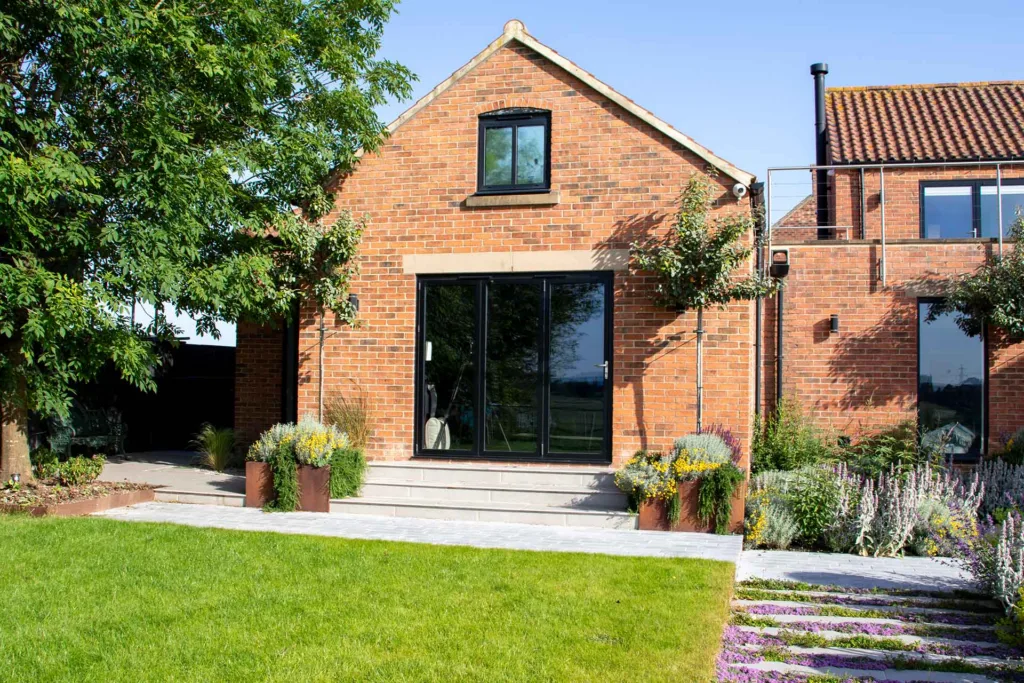
Daily Usability, Pets, and Track Design
For many households, rear patio doors serve as the primary entrance to the garden. It is often where dogs go in and out, children play, and muddy boots come off after a walk. Matching the door type to your routine is essential.
A bifold system’s slim single-track threshold makes stepping in and out effortless, particularly for toddlers or older pets who might trip over a wider multi-rail frame. Sliding doors require multiple running tracks side-by-side to accommodate overlapping panels, resulting in a deeper track profile.
Maintenance and Long-Term Performance
Both sliding and bifold doors require minimal long-term upkeep. Regularly cleaning the glass and aluminum frames with warm, soapy water, along with sweeping dust out of the running tracks, is usually all that is needed to keep them operating smoothly.
The vast majority of service calls for operational issues stem from two preventable factors: incorrect initial installation or build debris left in the tracks during construction.
Patio doors are often installed early during a build before plastering, floor tiling, or outdoor paving take place. If brick dust, grit, or plaster debris fall into the tracks while the door is used by tradespeople, rolling over that grit can damage the wheels and running gear.
Ensuring the tracks are thoroughly vacuumed out as soon as building work wraps up protects the mechanism and ensures smooth operation for years to come.
Deciding Which Door Suits Your Space
Choosing the right door comes down to how you plan to use your room:
- Choose a Korniche Sliding Door if you want wide, panoramic views, maximum thermal efficiency, and complete freedom to arrange furniture on both sides of the glass.
- Choose a Korniche Bifold Door if you want to open up an entire wall to your garden, enjoy flexible traffic door access, and benefit from a low-profile threshold.