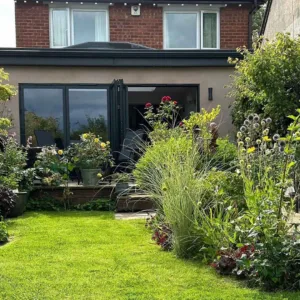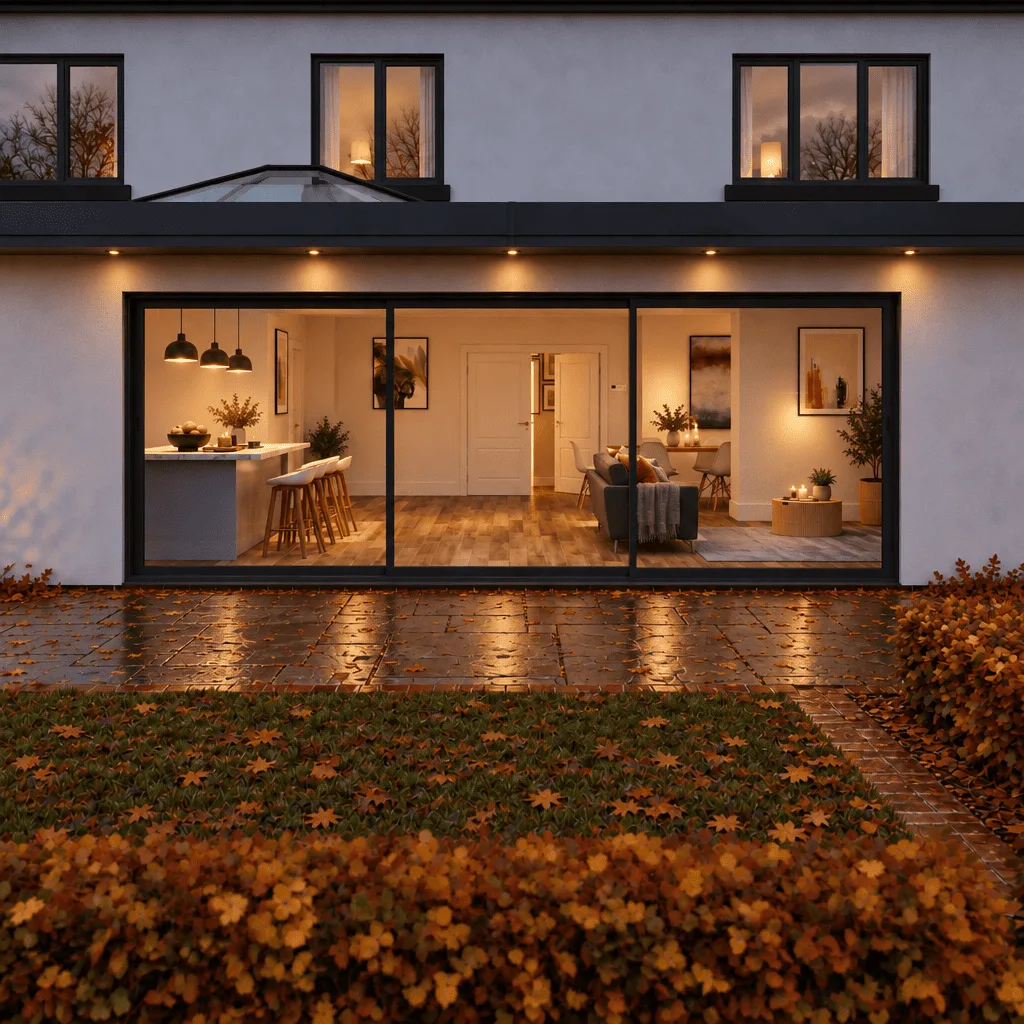
Once considered a dated feature of 1980s homes, sliding patio doors are enjoying a remarkable resurgence. But their return isn’t simply about changing fashion. It’s about a change of lifestyle, smarter design and the way we want to use our homes.
Sliding doors are nothing new. They’ve been a familiar feature in British homes since the 1970s, growing in popularity throughout the 1980s before gradually falling out of favour as French doors and bifold doors became the popular choice for home improvements and renovations.
For many of us, sliding patio doors bring back memories of the 1980s and 90s. Chunky white frames, smaller panes of glass and perhaps the occasional holiday apartment balcony. They were practical, familiar and did the job. But as home design evolved, French doors and later bifold doors began stealing the spotlight.
But sliding doors never really went away.
Instead, they evolved. Today’s aluminium sliding doors are almost unrecognisable.
Bulky profiles and interrupted views have given way to sleek frames, expansive glazing and contemporary engineering. What was once seen as a purely practical feature has become a desirable part of modern home design.
The biggest surprise? Sliding doors haven’t needed to reinvent themselves. They’ve simply become much better at doing what they’ve always done.
So, what’s behind their comeback?
The answer goes beyond aesthetics. From smaller gardens and changing living spaces to rising expectations around comfort, natural light and energy efficiency, sliding doors are increasingly well suited to modern life.
This isn’t just a passing trend. It’s a shift in how we use our homes.
Slimmer Frames, More Glass, Better Views
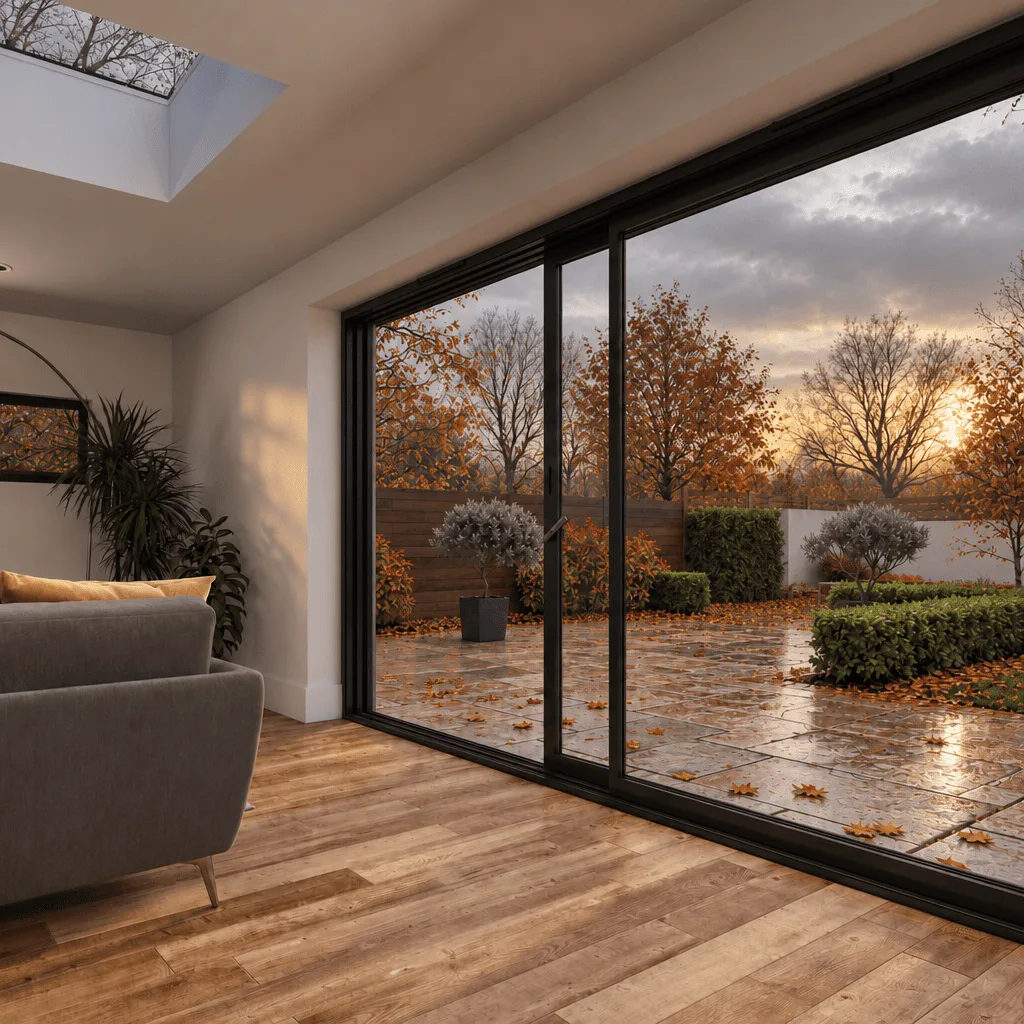
One of the biggest changes in sliding door design is the move towards slimmer aluminium frames and larger expanses of glass.
Older sliding doors often featured thick uPVC profiles that interrupted the view outside. Modern aluminium systems offer a very different experience.
Aluminium is naturally strong, allowing manufacturers (such as Korniche), to create slim frames while supporting large, heavy glass panels.
The result? More glass, less frame and a clearer connection to the outdoors.
This can make a remarkable difference.
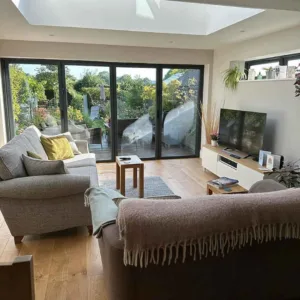
A garden becomes part of the room’s outlook. Natural light reaches further into the home, and even a relatively modest living space can feel brighter and more open.
There’s also been a shift in what homeowners want from their interiors.
Where bifold doors once offered the excitement of opening an entire wall, many now favour a more understated approach: uninterrupted views, clean lines and a sense of calm.
Sliding doors fit naturally into this style of living.
Rather than demanding attention, they allow the view to become the feature.
Sliding Doors Respect Your Space
Think about how you actually use your home.
Perhaps you’ve got a dining table beside your patio doors, a sofa overlooking the garden or outdoor furniture on the decking.
With hinged doors, you need to consider the space required for the doors to open. Depending on the configuration, this might mean moving furniture, keeping a section of the patio clear or planning around the door’s swing.
Sliding doors work differently.
Instead of opening inwards or outwards, they remain within the doors footprint.
And as new homes, extensions and outdoor spaces become increasingly carefully planned, making the most of every square metre matters.
If you’re working with a compact courtyard, a narrow patio or a kitchen extension, sliding doors allow you to arrange furniture around the way you want to live, rather than around the way your doors open.
Sometimes, the best design feature is the one you don’t have to think about.
Better Thermal Performance for Modern Homes
As the colder months arrive and heating becomes a bigger consideration, we’re all understandably paying closer attention to how efficiently our homes retain warmth.
And it’s not difficult to understand why.
With ongoing concerns around household finances, highlighted in BBC News’ reporting on the outlook for UK household incomes, the long-term cost of running a home remains an important consideration.
According to the Office for National Statistics (ONS), around 74% of households in England and Wales relied solely on mains gas for central heating in the 2021 Census.
And with wholesale natural gas prices subject to fluctuations, improving your home’s energy efficiency can be a sensible long-term investment.
Large areas of glass were once associated with draughts, cold spots and uncomfortable rooms during winter.
But glazing technology has come a long way.
Modern aluminium sliding doors incorporate thermally broken frames, high-performance double and triple glazing with sophisticated weather seals designed to help reduce heat loss.
A thermal break is an insulating barrier within the aluminium frame. It reduces the transfer of heat between the inside and outside of your home, helping to improve the door’s overall thermal performance.
Modern glazing also features low-emissivity coatings and insulating argon gas, helping to retain warmth during colder weather.
According to the Energy Saving Trust, energy-efficient windows and doors can help reduce heat loss, lower energy bills and improve comfort within the home.
Of course, not all sliding doors offer the same performance. The type of glazing, frame construction, weather seals and quality of installation all influence how efficiently a door performs.

Understanding U-values
When comparing products, it’s worth looking at the whole-door U-value, rather than simply the performance of the glass.
A U-value measures how easily heat passes through a building element. The lower the number, the better its insulating performance.
It’s also important to consider the complete door system, including the frame and glazing, rather than focusing on glazing in isolation.
In England, energy efficiency requirements for building work are covered by Approved Document L of the Building Regulations.
And while energy efficiency might not be the most exciting part of choosing new patio doors, it makes a real difference to how comfortable your home feels throughout the year.
Designed for the Unpredictable British Weather
Anyone who’s opened a patio door on a particularly windy day will know the feeling.
A sudden gust catches the door, turning that large panel into something resembling a sail. Before you know it, you’re wrestling with the handle, trying to stop the door from swinging open or slamming shut.
Sliding doors offer a practical advantage here.
Because the panels move horizontally along a track rather than swinging outwards, they don’t catch the wind in quite the same way.
You can open them partially for ventilation.
Of course, sliding doors should still be operated carefully in strong winds, and unsecured doors shouldn’t be left unattended. But for everyday use, particularly in exposed locations and during the colder, windier months, it’s another small detail that can make a surprisingly big difference.
Your patio doors should let the fresh air in, not leave you battling the British weather.
Everyday Flexibility
Sliding doors also offer flexibility when it comes to ventilation.
You can slide the door open a little to let in some fresh air or open it further when the weather is warmer.
Unlike some bifold door configurations, sliding doors don’t allow the entire opening to be cleared. At least one panel always remains within the frame.
For those who prioritise a completely open wall, bifolds are the better option.
But if uninterrupted views, easy operation and space efficiency are higher on your wish list, sliding doors have a lot to offer.
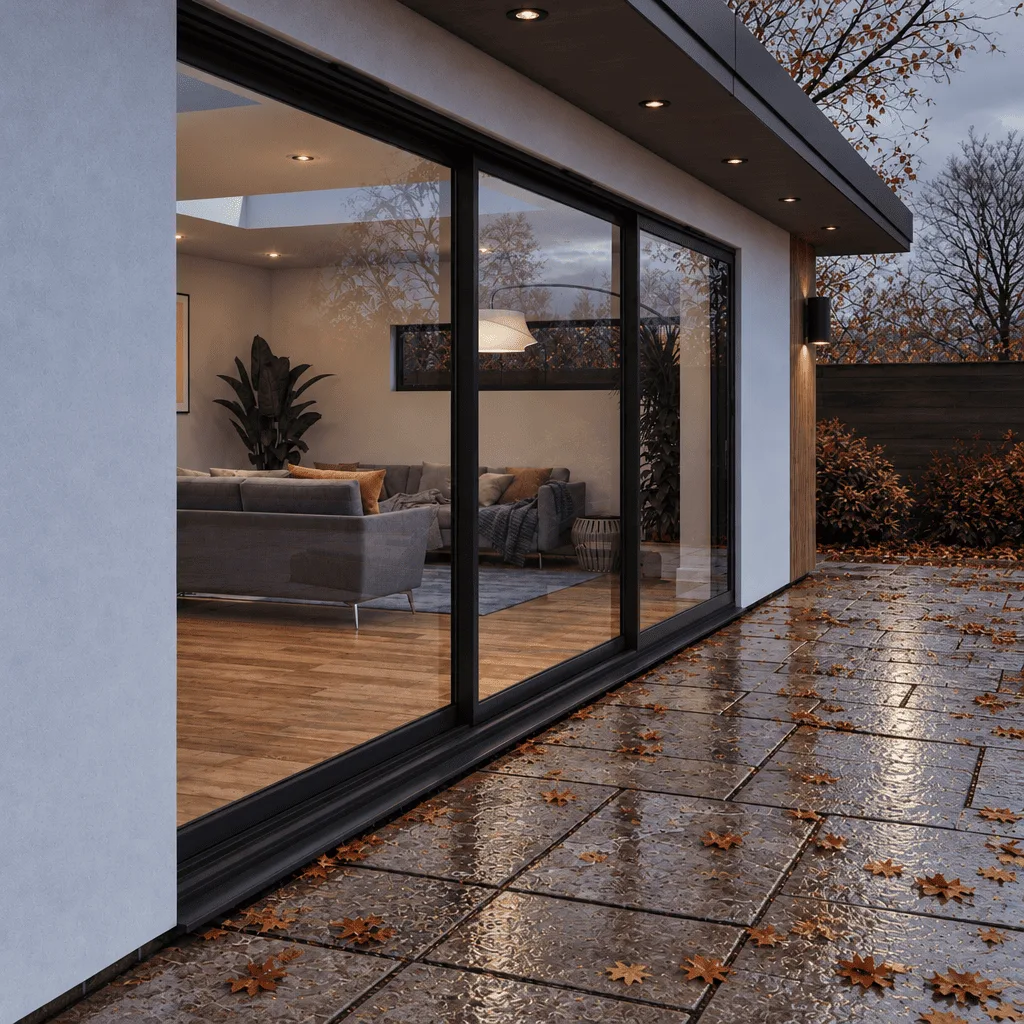
Blurring the Boundaries Between Indoors and Outdoors
Over the past decade, the way we use our homes has changed.
Kitchens have become social spaces. Extensions have become places to relax, entertain and spend time together. Gardens are increasingly treated as an extension of the living area rather than somewhere we visit occasionally.
And the doors connecting these spaces play an important role.
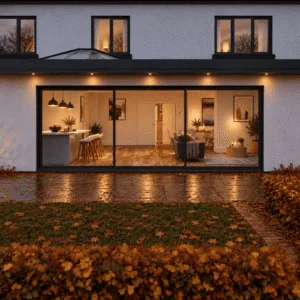
Large sliding glass doors create a visual connection between indoors and outdoors, even when they’re closed.
Instead of feeling like two separate areas, your kitchen, dining room or living space can feel connected to the garden throughout the year.
In summer, opening the doors creates an easy transition to the patio for barbecues, family gatherings or simply enjoying the sunshine.
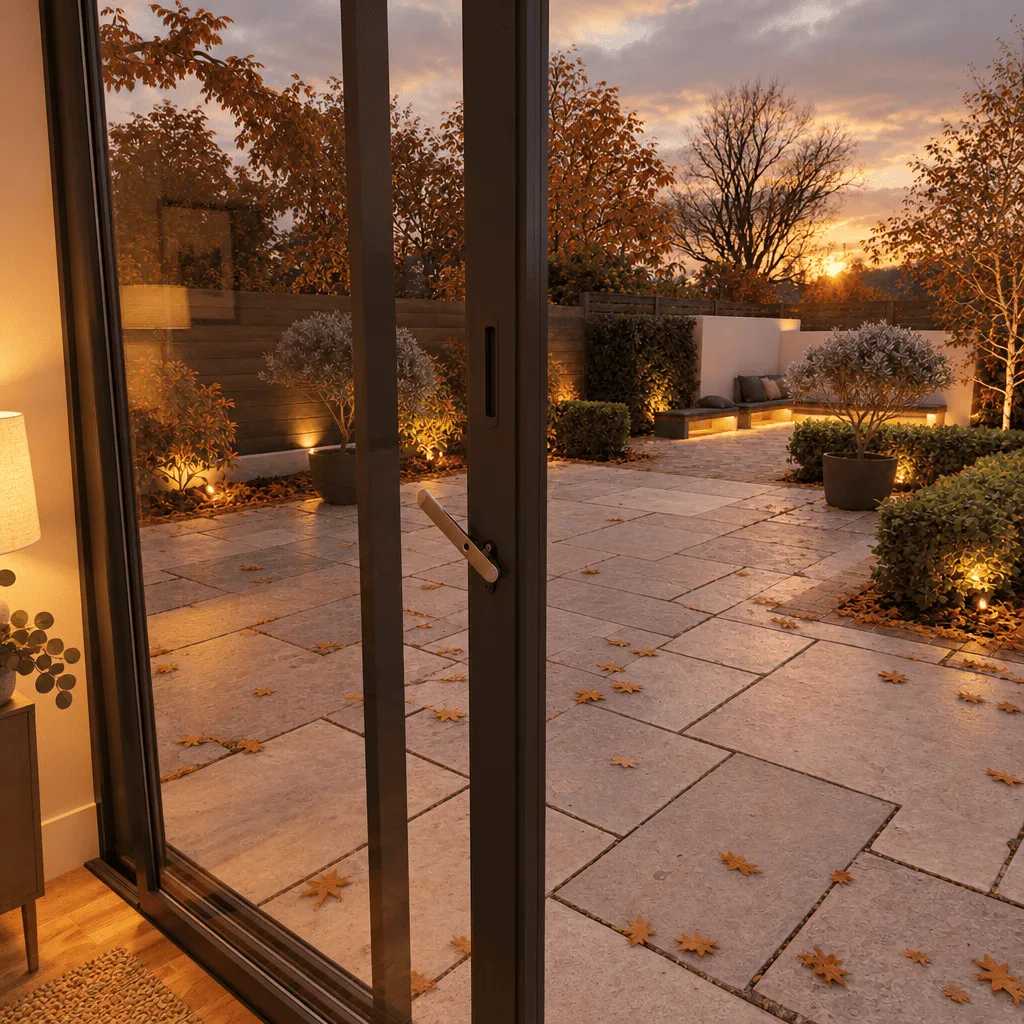
During autumn and winter, those same large glass panels allow you to enjoy views of the garden while staying warm inside.
In Britain, half of the year is considered cold. This is one of the reasons sliding doors work so well in contemporary home design.
They don’t need to be fully open to make an impact.
Even when closed, they can transform how a room looks and feels.
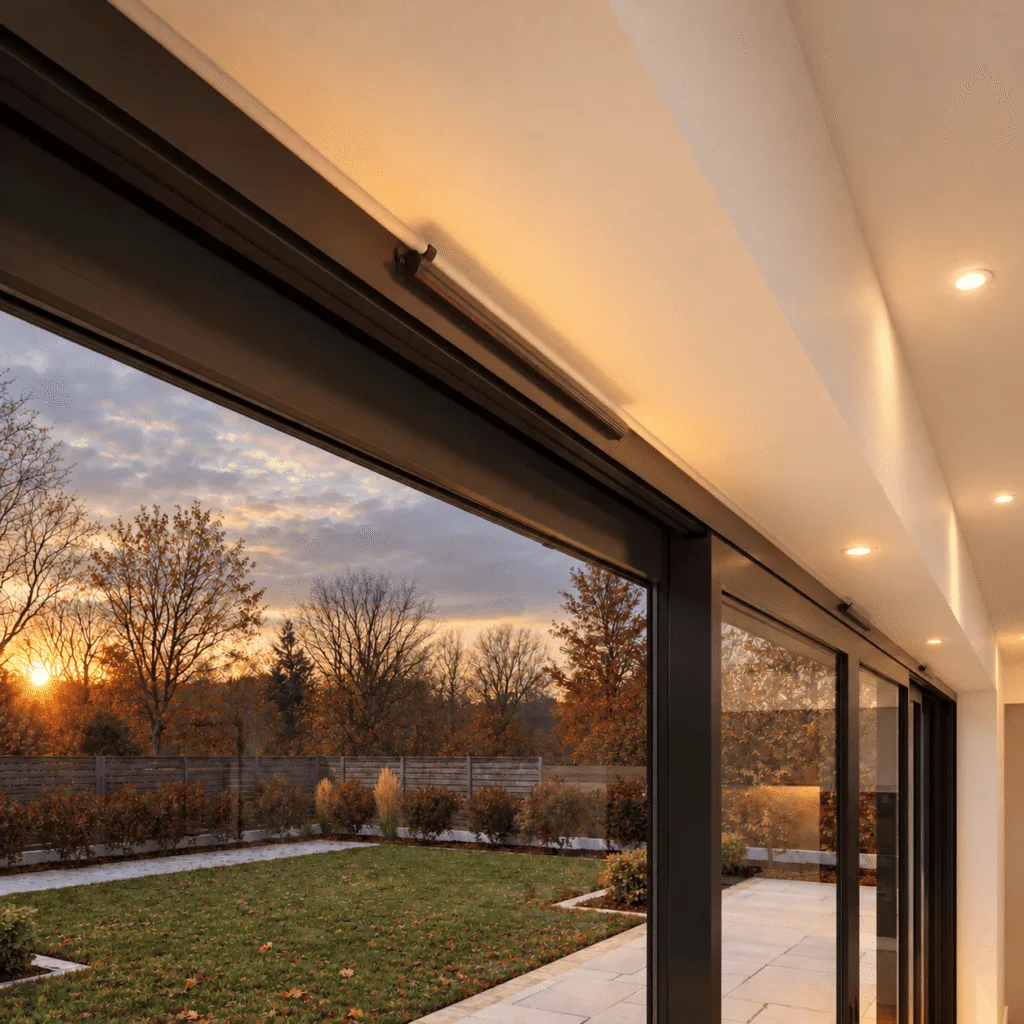
Aluminium Has Changed the Game
Perhaps the biggest reason sliding doors are enjoying renewed popularity is the material behind their transformation.
Modern aluminium systems are a world away from the bulky patio doors many people remember.
Aluminium combines strength with slim profiles, allow for larger glass panels and more refined designs.
It’s also durable, resistant to corrosion and available in a wide range of powder-coated finishes, making it a practical choice.
And with advances in thermal break technology, modern aluminium doors can offer impressive energy performance alongside their sleek appearance.
The result is a product that balances appearance, performance and everyday practicality.
For homeowners planning a renovation, extension or self-build, it’s a combination difficult to ignore.
Engineered for Modern Living
Harley Bidwell, Design Engineer at Made For Trade, who worked on the Cortizo 4700 Sliding Patio Door with Korniche Technology, explains how recent engineering developments have transformed the modern sliding door:
“Over the past 20–30 years, sliding door engineering has evolved to combine larger glass areas and slimmer sightlines with improved thermal efficiency, security and reliability.
With the Cortizo 4700 with Korniche Technology, a key focus has been simplifying installation through our patented SpeedBead system, which allows glazing beads to be quickly fitted and removed without damaging the frame’s paint finish. This saves time for installers while maintaining the quality of the finished product. The system also features PAS 24:2022 certified security, with high-strength shoot-bolts and anti-backdrive technology for added protection.
Modern sliding doors offer homeowners the perfect balance of aesthetics and practicality, maximising natural light and uninterrupted views while delivering the security, comfort and performance needed for everyday living.”
Harley Bidwell — Design Engineer, Made For Trade
For those planning a renovation, extension or self-build, that combination of thoughtful engineering, contemporary design and everyday practicality is difficult to ignore.
So, Are Sliding Doors Better Than Bifold Doors?
Not necessarily. And that’s an important point.
Both systems have their advantages, and the right choice depends on your home, available space and what matters most to you.
Bifold doors are ideal for those who want to open up as much of the doorway as possible, creating a wide connection between indoors and outdoors.
Sliding doors, on the other hand, are particularly appealing for when uninterrupted views, large glass panels and space-saving operation take priority.
It’s less about which system is better and more about which one works best for the way you live.
The Future Looks Clear
Sliding doors aren’t returning because homeowners have suddenly developed a fondness for retro design.
They’re returning because the technology has caught up with what modern homeowners want.
Larger panes of glass. Slimmer frames. Better thermal performance. Easier operation. More practical living spaces.
Today’s sliding doors combine all of these qualities in a design that feels simple, considered and timeless.
And perhaps that’s the real reason behind their resurgence.
The best home improvements aren’t always the ones that make the biggest statement. Sometimes, they’re the ones that simply make life better.
Discover Korniche Sliding Patio Doors
If you’re planning a renovation, extension or self-build, the Cortizo 4700 Sliding Patio Door with Korniche Technology combines contemporary aluminium design with practical features engineered for modern living.
With slim aluminium profiles, expansive glazing, contemporary finishes and thoughtful engineering, Korniche sliding doors are designed to complement the way you live.
Explore the Korniche range to discover the available configurations, finishes and glazing options, or find a local Korniche supplier or installer who can help bring your project to life.
Further Reading: Explore Sliding Doors
Thinking about installing sliding patio doors in your home? If you’re comparing different door styles or exploring the latest innovations, these articles can help you make the right choice.
Sliding Doors vs Bifold Doors: Which Is Better for Your Home?
Not sure which door style is right for your extension or renovation? Explore the key differences in design, opening space, practicality and everyday use.
Cortizo 4700 Sliding Patio Doors: New Handle & Lock Update
Discover how the addition of an external handle and locking option makes the Cortizo 4700 even more convenient for everyday living.
Discover the Cortizo 4700 Sliding Doors with Korniche Technology
Take a closer look at the engineering, design features and configuration options behind Korniche’s aluminium sliding patio doors.